Monaco Property Investment
Monaco property investment guide: prices over €100,000/m², zero income tax, residency rules and 9-11% costs. Learn why it’s the ultimate capital-preservation asset.…

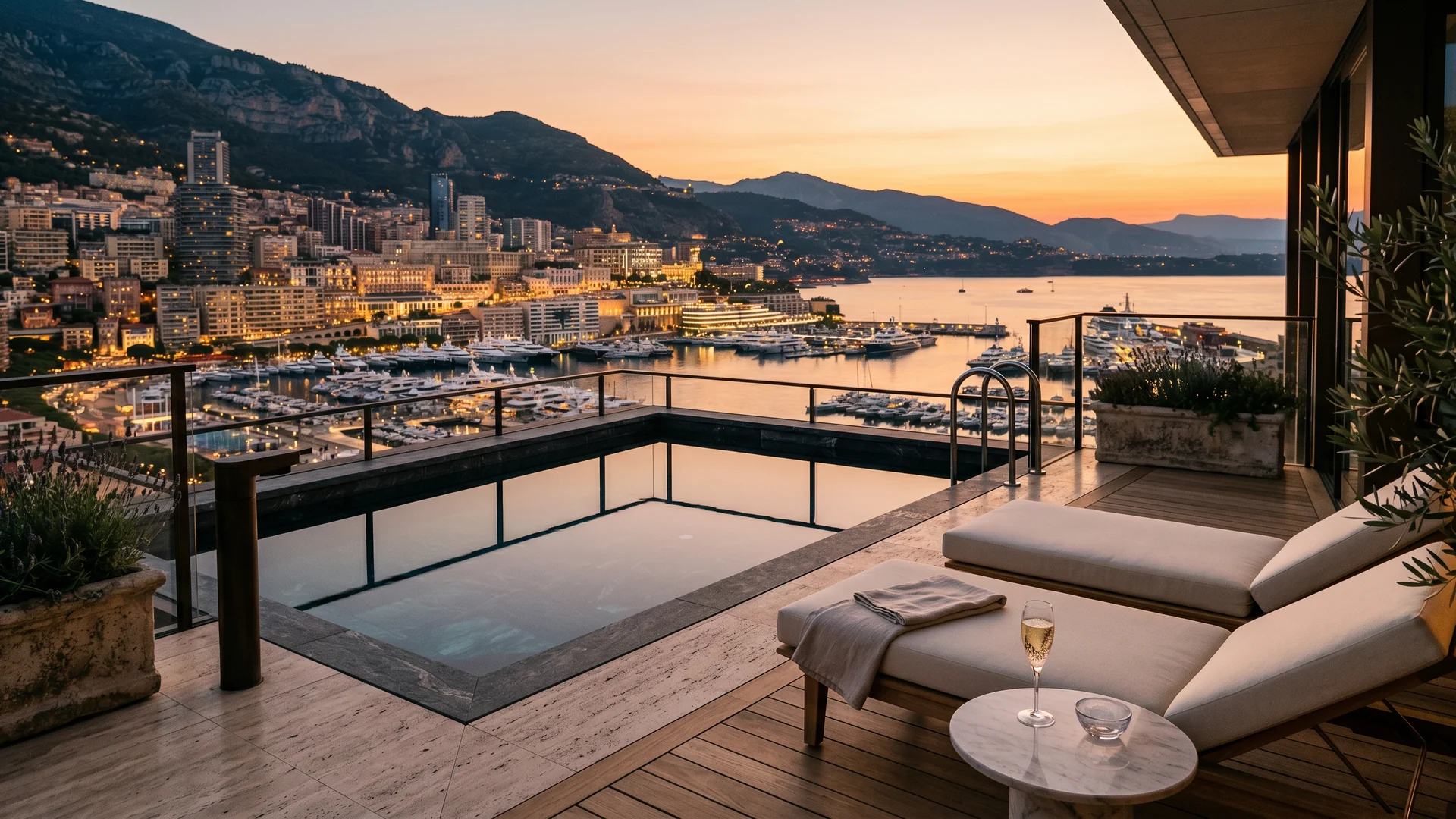
Monaco is the world's most expensive residential market, where prime property exceeds €100,000 per square metre and investment is primarily a capital-preservation and status strategy, not a yield play.
Key Takeaways
- Monaco averages over €50,000 per square metre, with prime Monte Carlo and Mareterra properties reaching €100,000 to €130,000 per square metre.
- Tax advantages drive demand: zero personal income tax (except for French nationals), zero capital gains tax on property, zero wealth tax, and no local property taxes.
- Monaco contains fewer than 30 freestanding villas; rare transactions can reach €100 million to €300 million, with Villa La Vigie reportedly valued above €300 million.
- The Mareterra (Anse du Portier) eco-district, completed 2022-2025 with architects Renzo Piano and Tadao Ando, added roughly 110 apartments and 10 villas to the housing stock.
- Residency is not automatic with ownership; applicants typically deposit €500,000 to €1 million in a Monaco bank and the Carte de Séjour process takes three to six months.
- Transaction costs run about 9 to 11 percent of the purchase price, including roughly 6 percent notary fees and 3 percent agent fees, while rental yields are only 1.5 to 2.5 percent gross.
- Entry requires around €3 million to €4 million for a small two-bedroom apartment, rising to €10 million to €50 million for prime Monte Carlo residences.

Monaco Property Investment: The World's Most Exclusive Market
Monaco's Unique Market Position
The Principality of Monaco — a sovereign city-state occupying just 2.02 square kilometres on the French Riviera — stands alone as the world's most expensive and exclusive residential real estate market. With an average price per square metre exceeding €50,000 and prime properties regularly achieving €100,000 per square metre, Monaco's property market is without peer globally. The reasons for this extraordinary premium are well-established: zero personal income tax (for residents who are not French nationals), zero capital gains tax on property, zero wealth tax, political stability spanning over 700 years under the Grimaldi dynasty, exceptional security with one police officer per approximately 70 residents, and a Mediterranean lifestyle that combines Monte Carlo glamour with practical proximity to Nice International Airport.
2025 Transaction Overview
The total value of Monaco's residential real estate stock is estimated at approximately €85 billion, with annual transaction volumes typically ranging from €2.5 billion to €4.5 billion depending on economic conditions and available supply.The Monaco Market Structure
Districts and Price Hierarchy
Monaco's residential real estate market is divided into distinct quartiers, each with its own character and pricing structure. Monte Carlo — the district surrounding the iconic Casino de Monte-Carlo, the Hôtel de Paris, and the Carré d'Or shopping precinct — represents the absolute pinnacle. Apartments in this district, particularly in prestige buildings such as the Tour Odéon (Monaco's only skyscraper and its tallest building at 170 metres), the One Monte-Carlo residence, and the historic buildings around Casino Square, command €60,000 to €120,000 per square metre. A three-bedroom apartment of 200 square metres in a prestige Monte Carlo building would typically sell for €12 million to €24 million.
New-Build vs Resale Dynamics
Larvotto — Monaco's eastern beach district — has undergone a dramatic transformation following the ambitious land reclamation project that extended the district six hectares into the sea. The new Anse du Portier eco-district (also known as Mareterra), completed in phases between 2022 and 2025, added approximately 110 luxury apartments and 10 villas to Monaco's housing stock. Properties in this new district, which features a marina, public parks, and a pedestrianised waterfront promenade, have sold for €70,000 to €130,000 per square metre, reflecting a premium for the novelty, design quality (involving architects including Renzo Piano and Tadao Ando), and waterfront positioning. The existing Larvotto district, with its established beachfront apartment buildings, commands €45,000 to €80,000 per square metre. Fontvieille, the district constructed on land reclaimed from the sea in the 1970s, offers a more residential, family-oriented environment. This district includes the Port de Fontvieille marina, the Stade Louis II sports complex, and extensive parklands. Prices in Fontvieille typically range from €35,000 to €60,000 per square metre, making it Monaco's most 'accessible' luxury district. La Condamine — the historic port district surrounding Port Hercule — combines traditional Monegasque character with modern waterfront living. Apartments with views over the port and the Monaco Grand Prix circuit command €40,000 to €75,000 per square metre. The Jardin Exotique district, located on the heights of Monaco near the border with France, offers some of the principality's most panoramic views and a quieter residential environment, with prices from €30,000 to €55,000 per square metre. Monaco-Ville (Le Rocher), the historic old town atop Monaco's famous rock, offers a limited number of historic residences with exceptional character. Properties here are rarely available and command €50,000 to €90,000 per square metre.

The Villa Market: Extreme Rarity
The World's Rarest Residential Asset
Villas in Monaco are among the rarest residential property categories on earth. The principality contains fewer than 30 freestanding villas in total. These properties, concentrated in the areas of Larvotto, the Avenue de la Costa, and the new Mareterra development, are virtually never publicly marketed. When they do transact — perhaps one or two per year — prices can reach €100 million to €300 million, with per-square-metre values exceeding €150,000.
Recent Villa Transactions
Villa La Vigie, the historic Belle Époque villa on the tip of Monte-Carlo that was once the summer residence of the Grimaldi family and later Karl Lagerfeld, is among the most valuable, with a reported valuation in excess of €300 million. The villas of Mareterra, including the waterfront Villa Le Rocher, are the first new-build villas added to Monaco's housing stock in decades and have set new price benchmarks.The Rental Market
Luxury Rental Demand Drivers
Monaco's rental market is as extraordinary as its sales market. Prime apartments command monthly rents of €150 to €300 per square metre, meaning a 200-square-metre three-bedroom apartment in Monte Carlo rents for €30,000 to €60,000 per month. Luxury penthouses with large terraces can rent for €80,000 to €200,000 per month. The rental market is driven by: international professionals working in Monaco's finance, shipping, and professional services sectors; high-net-worth individuals establishing Monegasque residency; and seasonal tenants using Monaco as a base for the Riviera social season, the Formula 1 Grand Prix, and the Monaco Yacht Show.
Yields and Investment Returns
Rental yields in Monaco are modest by commercial real estate standards — typically 1.5 to 2.5 percent gross — but this reflects the market's status as a capital preservation asset rather than an income investment.Residency Requirements and Procedures
The Carte de Séjour Process
Monaco's residency process is a critical consideration for anyone contemplating property acquisition in the principality. Unlike many jurisdictions, property ownership does not automatically confer residency rights. To become a Monegasque resident, individuals must: rent or purchase a property in Monaco that is appropriately sized for their household needs; demonstrate sufficient financial resources to support themselves (typically by depositing a minimum of €500,000 to €1 million with a Monaco bank, though the actual amount is assessed on a case-by-case basis); provide a clean criminal record from their country of origin; and submit an application to the Direction de la Sûreté Publique. The process typically takes three to six months.
Financial Requirements and Proof of Means
Monaco residency offers significant tax advantages: no personal income tax (except for French nationals, who remain taxable in France under the 1963 bilateral tax treaty), no wealth tax, no capital gains tax (except for resale of properties held for less than five years by non-residents), and no local property taxes equivalent to council tax. However, French nationals who became resident in Monaco after 13 October 1962 remain subject to French income tax, a legacy of the Franco-Monegasque tax treaty.Transaction Costs and Purchasing Process
Notaire Fees and Registration Tax
Property acquisition in Monaco involves significant transaction costs. The total cost of purchase typically represents approximately 9 to 11 percent of the purchase price, comprising: notary fees of approximately 6 percent (of which about 4.5 percent is registration duty payable to the state and 1.5 percent is the notary's fee); estate agent fees of 3 percent (typically paid by the buyer, though practices vary); and bank and administrative charges.
Agency Fees and Additional Costs
There is no equivalent of the French wealth tax (IFI) and no annual property wealth tax. The purchasing process is conducted under Monegasque law, which, while based on the French Napoleonic Code, has its own specific provisions. Due diligence should include verification of the property's legal status, any charges or encumbrances at the Monaco mortgage registry, and the specific terms of the co-ownership regulations (règlement de copropriété) for apartment buildings. Engaging a Monaco-admitted lawyer (avocat-défenseur) is strongly recommended.

New Developments and Future Supply
Mareterra and Land Reclamation
New residential supply in Monaco is profoundly constrained by geography. The principality's total land area — 2.02 square kilometres — cannot be significantly expanded given the practical and environmental limits of further land reclamation into the Mediterranean. The Mareterra project (completed 2022-2025) added approximately 110 apartments and 10 villas, representing the most significant residential expansion in decades.
Future Pipeline and Supply Outlook
Looking ahead, there are discussions about potential further modest reclamation projects, and vertical development — building upwards — remains an option, as demonstrated by the Tour Odéon. However, strict height restrictions and strong local opposition to high-rise development limit this approach. The fundamental reality of Monaco's property market is that supply is essentially fixed while global demand, driven by the principality's unique fiscal and lifestyle proposition, continues to grow. This structural imbalance is the bedrock of Monaco's extraordinary property values.Investment Thesis and Risk Assessment
Capital Preservation Case
Monaco property investment is fundamentally a capital preservation and status strategy rather than a yield play. Prices have demonstrated remarkable stability across economic cycles, with the average price per square metre increasing from approximately €28,000 in 2005 to over €50,000 in 2025 — a compound annual growth rate of approximately 3.1 percent. While this growth rate is modest compared to markets with more cyclical dynamics, it reflects the consistent (if unspectacular) appreciation of one of the world's most defensive real estate assets.
Risk Factors
The key risks to Monaco property values include: potential political pressure on the principality's tax status from the European Union and neighbouring France (the EU has periodically scrutinised Monaco's tax regime, though the principality has successfully defended its sovereignty in this area); the concentration of the Monaco economy on finance and luxury services, which makes it sensitive to global economic cycles; and the physical and environmental risks associated with climate change and rising sea levels, given Monaco's coastal location (the principality has invested heavily in coastal defences and the Mareterra project was designed with climate resilience in mind).Growth Catalysts
Despite these risks, Monaco's unique combination of fiscal advantages, security, stability, and lifestyle continues to attract global ultra-high-net-worth buyers. As long as these fundamental attributes remain intact, Monaco property is likely to retain its status as the ultimate defensive luxury real estate asset.Conclusion
Investing in Monaco property is unlike investing in any other real estate market in the world. It requires significant capital — a minimum of approximately €3 million to €4 million for a small two-bedroom apartment in a less prestigious district, rising to €10 million to €50 million for prime Monte Carlo residences — and an acceptance of modest yields in exchange for exceptional capital preservation, fiscal efficiency, and the prestige of owning a home in the world's most exclusive city-state. For those who can meet the financial threshold and value the unique combination of security, privacy, and status that Monaco provides, property in the principality remains the ultimate trophy real estate asset.

Frequently Asked Questions (FAQ)
How much does property cost per square metre in Monaco?
Monaco's average price exceeds €50,000 per square metre, with prime properties regularly achieving €100,000 per square metre. Monte Carlo apartments command €60,000 to €120,000, the new Mareterra district €70,000 to €130,000, while Fontvieille, Monaco's most accessible luxury district, ranges from €35,000 to €60,000 per square metre.
What are the tax advantages of owning property and residing in Monaco?
Monaco residency offers no personal income tax, no wealth tax, no capital gains tax, and no local property taxes equivalent to council tax. Exceptions apply: French nationals resident after 13 October 1962 remain taxable in France, and capital gains tax applies to resales of properties held under five years by non-residents.
How do you become a resident of Monaco when buying property?
Property ownership alone does not confer residency. Applicants must rent or buy an appropriately sized home, prove financial means (typically depositing €500,000 to €1 million in a Monaco bank), provide a clean criminal record, and apply to the Direction de la Sûreté Publique. The process usually takes three to six months.
What are the transaction costs of buying property in Monaco?
Total purchase costs typically represent 9 to 11 percent of the price. This comprises about 6 percent notary fees (roughly 4.5 percent registration duty plus 1.5 percent notary fee), 3 percent estate agent fees usually paid by the buyer, and bank and administrative charges. Engaging a Monaco-admitted avocat-défenseur is strongly recommended.
How rare and expensive are villas in Monaco?
Villas are among the rarest residential assets on earth; Monaco contains fewer than 30 freestanding villas, with perhaps one or two transacting per year. Prices can reach €100 million to €300 million, exceeding €150,000 per square metre. Villa La Vigie, once home to Karl Lagerfeld, is reportedly valued above €300 million.
What rental yields and rents can investors expect in Monaco?
Rental yields are modest at typically 1.5 to 2.5 percent gross, reflecting Monaco's status as a capital-preservation asset rather than an income investment. Prime apartments rent for €150 to €300 per square metre monthly, so a 200-square-metre Monte Carlo apartment rents for €30,000 to €60,000 per month; luxury penthouses reach €80,000 to €200,000.
What is the Mareterra development in Monaco?
Mareterra, also known as the Anse du Portier eco-district, is a land reclamation project extending Larvotto six hectares into the sea, completed in phases between 2022 and 2025. Designed by architects including Renzo Piano and Tadao Ando, it added around 110 apartments and 10 villas, featuring a marina, public parks, and a pedestrianised waterfront promenade.
Is Monaco property a good investment, and what are the risks?
Monaco property is fundamentally a capital-preservation and status strategy rather than a yield play, with prices rising from about €28,000 per square metre in 2005 to over €50,000 in 2025, a roughly 3.1 percent annual growth rate. Key risks include EU and French pressure on its tax status, economic concentration in finance, and climate-related sea-level threats.

More from Monaco
The Impact of Home Office on Monaco’s Luxury Property Market
Monaco, a tiny principality nestled along the French Riviera, is synonymous with opulence and exclusivity. Known for its stunning Mediterranean coastl…
Attracting International Buyers for Your Property
In today’s interconnected world, the international real estate market has become a dynamic and multifaceted arena. Investors and buyers from var…

Tips for International Buyers: What to Consider When Buying in Monaco
Monaco, a tiny principality nestled along the French Riviera, is renowned for its opulence and luxury. The real estate market here is one of the most …