Future of Luxury Real Estate
Explore the future of luxury real estate: 12 trends from wellness residences and branded properties to climate-resilient locations reshaping the global market.…

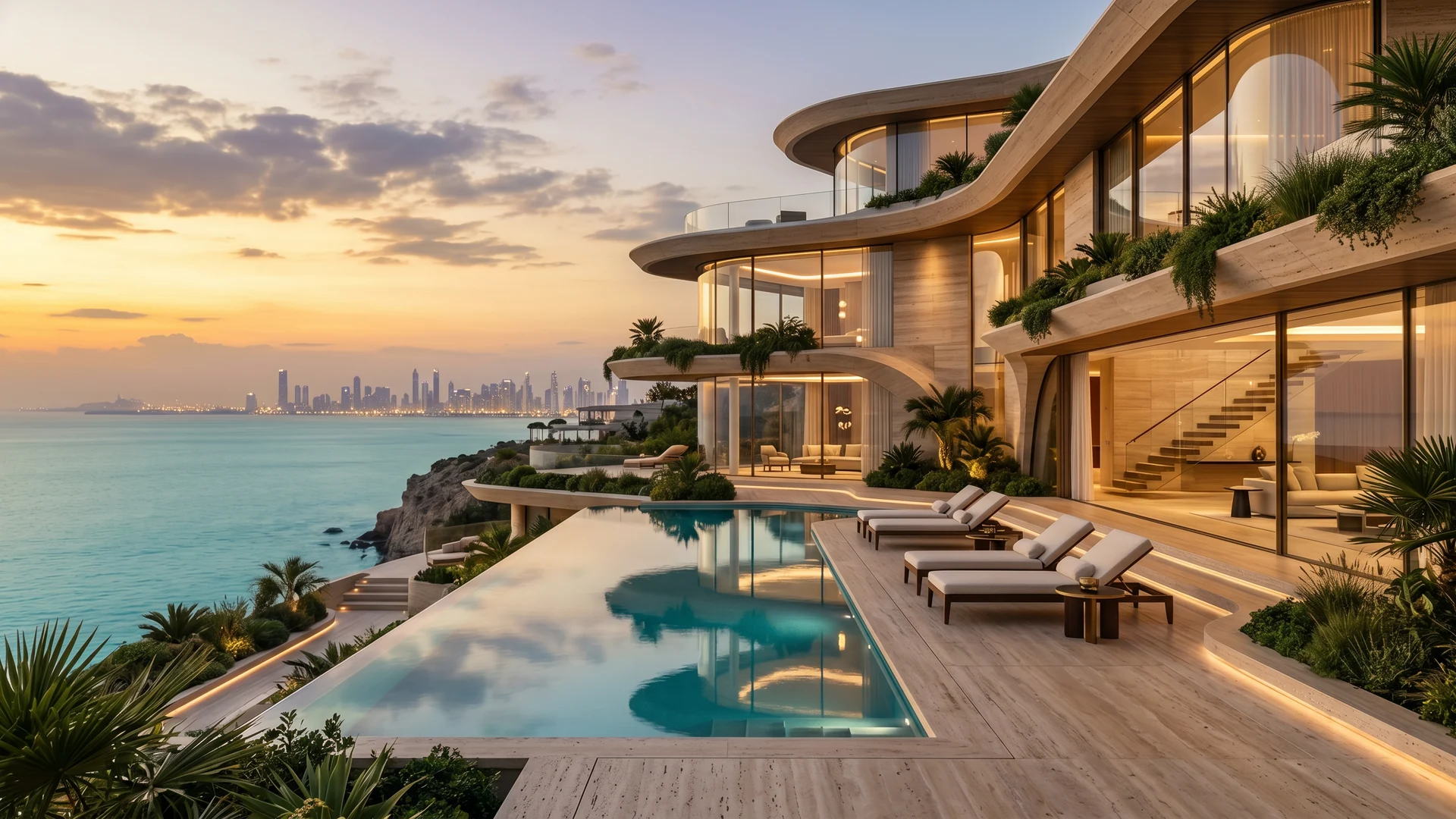

The future of luxury real estate is sustainable, intelligent, wellness-oriented and experience-rich, driven by twelve trends reshaping prime markets as wealth, climate and technology converge toward 2030.
Key Takeaways
- Properties with comprehensive wellness features command price premiums of 15 to 30 percent in major luxury markets, according to Savills and Knight Frank, while the global wellness real estate market was valued at roughly $438 billion in 2024.
- Branded residences operated under hotel, fashion or automotive marques such as Four Seasons, Aman, Armani/Casa, Bulgari, Aston Martin and Bentley command 25 to 45 percent premiums, and the global pipeline grew from about 400 projects in 2015 to over 580 in 2025.
- The Great Wealth Transfer of an estimated $84 trillion to younger generations by 2045 is shifting buyer priorities toward sustainability, wellness and technology, with women now making up about 35 percent of global UHNWIs.
- Smart home technology for luxury residences is projected to grow over 15 percent annually through 2030, with total technology investment in a super-prime home often exceeding $500,000.
- Blockchain property registries are being piloted in Dubai, Switzerland, Sweden and Georgia, while tokenisation enables fractional ownership of trophy assets and immersive digital twins serve remote buyers.
- Climate migration favours climate-resilient locations like the Swiss and Austrian Alps and the Rocky Mountains, while hurricane-prone, wildfire-exposed and low-lying coastal markets face valuation and insurance pressures.
- Residency- and citizenship-by-investment programmes in Portugal, Greece, Spain, Malta and the UAE drive demand, even as the EU tightens rules and pushes member states to restrict investor citizenship schemes.
The Future of Luxury Real Estate: Trends Reshaping the Global Market
The luxury real estate market stands at an inflection point as we approach 2030. Convergence of technological innovation, demographic transformation, environmental imperatives, and evolving conceptions of luxury itself are reshaping the global prime residential landscape. This comprehensive analysis examines the twelve most significant trends that are defining the future of luxury real estate and their implications for investors, developers, and homeowners in the world's most desirable property markets.
1. The Rise of the 'Wellness Residence'
Wellness has emerged as the defining luxury amenity of the 2020s, transcending the spa and gym to become an integrated design philosophy. The next-generation luxury residence incorporates circadian-lighting systems that adjust colour temperature throughout the day to support natural sleep-wake cycles; advanced air and water filtration systems (ranging from HEPA and activated carbon to ozone and UV purification); dedicated wellness spaces including meditation rooms, yoga studios, and private treatment suites; cold plunge pools, infrared saunas, and cryotherapy chambers; biophilic design principles that integrate natural materials, living walls, and seamless indoor-outdoor transitions; and circadian and acoustic design optimisation for sleep quality. Properties incorporating comprehensive wellness features command price premiums of 15 to 30 percent in major luxury markets, according to data from Savills and Knight Frank. The global wellness real estate market was valued at approximately $438 billion in 2024 and is projected to exceed $580 billion by 2028.

2. Sustainability as a Luxury Differentiator
Environmental performance has transitioned from a niche concern to a core determinant of luxury property value. Net-zero energy homes incorporating photovoltaic arrays, battery storage, geothermal heat pumps, and passive house design principles are increasingly demanded by high-net-worth buyers, particularly in Europe and North America. The development of sustainable luxury materials — from carbon-capturing concrete to recycled and recyclable composite stone — is reshaping the palette of high-end construction. Water self-sufficiency through rainwater harvesting, greywater recycling, and on-site water treatment is an increasingly valued feature in water-stressed luxury markets such as Ibiza, Mallorca, and the South of France. The alignment of luxury with sustainability is producing a new paradigm: the 'regenerative residence' that generates more energy than it consumes, replenishes groundwater, and enhances biodiversity on its site. Developers and owners who fail to invest in environmental performance risk value depreciation as sustainability becomes an expected baseline for luxury property.
3. The Smart Home Revolution: From Automation to Intelligence
The luxury smart home of the near future will transcend current automation of lighting, climate, and security to incorporate true artificial intelligence. Anticipatory environments will learn occupants' preferences and rhythms, automatically adjusting temperature, lighting, audio, and even scent. Health monitoring systems integrated into the built environment will track air quality, allergens, and biometrics, providing real-time wellness feedback. Robotic systems for maintenance, cleaning, and security will become standard in super-prime residences. Quantum-secure communication and physical cybersecurity will be essential features for ultra-high-net-worth homeowners concerned with privacy and data protection. The smart home technology market for luxury residences is projected to grow at over 15 percent annually through 2030, with total technology investment in a super-prime residence often exceeding $500,000 and reaching several million dollars in the most advanced implementations.
4. The Post-Pandemic Spatial Reordering
The COVID-19 pandemic permanently altered the spatial requirements of luxury homes. The dedicated home office (or multiple offices for two-career couples), the home gym, the home cinema, and the multi-purpose 'flex' space have become non-negotiable requirements. The 'residential campus' concept — a primary residence with multiple satellite structures including guest houses, staff quarters, offices, studios, and recreational facilities — has gained traction among ultra-high-net-worth buyers seeking to minimise unnecessary movement and to accommodate multi-generational living arrangements. Outdoor living spaces — kitchens, dining areas, lounges, fire pits, and entertainment zones — have expanded dramatically, with heated terraces, retractable enclosures, and sophisticated landscape design extending their seasonal usability.
5. The Branded Residence Ascendancy
The branded residence sector — luxury residential properties developed and operated under the brand of a five-star hotel or luxury marque — is the fastest-growing segment of the global luxury property market. The pipeline of branded residence projects globally has expanded from approximately 400 in 2015 to over 580 in 2025, with a growth rate of approximately 5 percent annually. The phenomenon has expanded beyond traditional hotel brands (Four Seasons, Ritz-Carlton, Mandarin Oriental, Aman) to encompass: fashion and jewellery brands (Armani/Casa, Bulgari, Fendi Casa, Missoni), automotive brands (Aston Martin, Bentley, Porsche, Pagani), and lifestyle and design brands. Branded residences command price premiums of 25 to 45 percent over comparable non-branded luxury properties, reflecting the value of brand assurance, service quality, design integrity, and the 'turnkey' convenience prized by international buyers. The branded residence model is expanding beyond gateway cities and resort destinations into secondary luxury markets and mixed-use urban developments.
6. The Digital Transformation of Real Estate Transactions
Blockchain, tokenisation, and artificial intelligence are converging to reshape how luxury property is bought, sold, and owned. Blockchain-based property registries — already being piloted in Dubai, Switzerland, Sweden, and Georgia — promise to reduce transaction friction, enhance title security, and enable instantaneous, low-cost property transfers. Real estate tokenisation — the division of property ownership into digital tokens recorded on a blockchain — is enabling fractional ownership of trophy assets and democratising access to luxury property investment, albeit with regulatory and practical challenges to be resolved. AI-powered valuation, due diligence, and transaction platforms are beginning to reduce the cost, time, and opacity of property transactions. Virtual and augmented reality property viewings — dramatically accelerated by the pandemic — are evolving into immersive digital twins that allow remote buyers to experience properties with extraordinary fidelity. The 'digital nomad' and 'global citizen' phenomena are increasing demand for flexible, short-term luxury rental arrangements and for properties that can function as productive remote workspaces.
7. Demographic Transformation and the Great Wealth Transfer
The luxury real estate market is being reshaped by profound demographic shifts. The Great Wealth Transfer — the intergenerational transfer of an estimated $84 trillion from the Baby Boomer and Silent generations to Generation X, Millennials, and eventually Generation Z by 2045 — is already influencing luxury property markets. Millennial and Gen Z luxury buyers have distinctly different preferences from their predecessors: they prioritise sustainability, wellness, technology, and experiences over square footage and formal entertaining spaces. The rise of the self-made ultra-wealthy — entrepreneurs, technology founders, and cryptocurrency investors — is creating a new buyer cohort with different aspirations, risk tolerances, and geographical preferences. The increasing prevalence of female ultra-high-net-worth individuals (women now constitute approximately 35 percent of global UHNWIs and are the fastest-growing wealth segment) is influencing design, amenity, and service priorities in luxury residential development. The growth of multi-generational living — driven by ageing populations, housing affordability constraints, and evolving cultural norms — is increasing demand for larger, more flexible luxury properties capable of accommodating extended families.
8. Climate Migration and the Search for Climate-Resilient Luxury
Climate change is emerging as a significant factor in luxury residential location decisions. Climate migration — the voluntary or involuntary relocation of populations in response to environmental changes — is beginning to influence luxury property markets. Areas perceived as climate-resilient — characterised by moderate temperatures, reliable water supplies, and low exposure to wildfires, flooding, and extreme weather — are attracting increased interest. This trend favours: high-altitude alpine locations (the Swiss and Austrian Alps, the Rocky Mountains), temperate northern European and North American locations, and elevated coastal locations with Mediterranean climates. Conversely, luxury markets exposed to acute climate risks — waterfront properties in hurricane-prone regions, wildfire-exposed hillside locations, and low-lying coastal areas vulnerable to sea-level rise — face potential valuation impacts. Insurance costs and availability are becoming critical variables in luxury property underwriting, with premiums in high-risk areas rising significantly. Forward-looking luxury developers and investors are incorporating climate resilience into property selection, design, and valuation.
9. The Evolution of Urban Luxury: The Polycentric City
The concept of the luxury urban residence is evolving in response to post-pandemic spatial preferences, mobility innovations, and changing work patterns. The '15-minute city' concept — where all essential amenities and services are accessible within a 15-minute walk or cycle — is influencing luxury residential location decisions. Urban luxury is diffusing from traditional central cores into polycentric networks of multi-nodal luxury neighbourhoods. Micromobility infrastructure — electric bike and scooter lanes, pedestrianised streets, green corridors — is enhancing the quality and convenience of urban luxury living. Mixed-use luxury developments combining residential, office, retail, hospitality, and cultural components in integrated communities are proliferating, offering residents a self-contained luxury ecosystem.
10. The Experience Economy and Residential Hospitality
The luxury property experience increasingly extends beyond the physical dwelling to encompass a curated programme of services, events, and experiences. 'Residential hospitality' — the application of luxury hotel service standards to private residences — is redefining expectations. Concierge services encompassing everything from restaurant reservations and travel arrangements to art acquisition and philanthropic advisory are becoming standard in luxury residential developments. Curated resident experiences — private chef dinners, wine tastings, wellness retreats, art tours, and cultural events — are key differentiators. The 'residential club' model — combining luxury living with private members' club amenities — is proliferating in gateway cities worldwide, with brands such as Soho House, Aman, and Core Club extending into residential development.
11. Geopolitical Safe Havens and Residency Mobility
Geopolitical uncertainty and the growing emphasis on global mobility are reshaping luxury property investment patterns. Residency-by-investment and citizenship-by-investment programmes (Golden Visas and Golden Passports) have become significant drivers of luxury property demand in jurisdictions including Portugal, Greece, Spain (though the programme is being wound down), Malta, the UAE, and various Caribbean nations. The demand for 'safe-haven' properties — luxury homes in politically stable, legally secure jurisdictions — has intensified, benefiting markets in Switzerland, the UAE, Singapore, and selected Asia-Pacific and European destinations. The trend towards 'portfolio citizenship' — the strategic acquisition of multiple residencies and citizenships as a form of personal, financial, and geopolitical insurance — is increasingly influencing the luxury property acquisition strategies of ultra-high-net-worth individuals and international families. The regulatory environment for these programmes is tightening, with the European Union applying pressure on member states to restrict or eliminate investor citizenship schemes, creating urgency for prospective applicants.
12. The Macro Investment Thesis: Luxury Real Estate in a Post-ZIRP World
The era of zero interest rate policy (ZIRP) that supercharged asset prices from 2009 to 2022 has ended, and the luxury real estate market is adjusting to a new macroeconomic environment. Higher interest rates have increased the cost of leverage but have not, to date, significantly dampened luxury property demand, reflecting the high proportion of cash buyers in the ultra-prime segment. However, the relationship between luxury property values and interest rates is complex and market-specific, with some segments (particularly those popular with leveraged investors) potentially more exposed than others. Luxury real estate is increasingly viewed as a 'real asset' that provides an inflation hedge and store of value in an environment of persistent fiscal deficits, monetary expansion, and geopolitical uncertainty. The correlation between luxury property values and equity markets has weakened in some segments, positioning prime residential real estate as a genuine diversifier within ultra-high-net-worth portfolios. The institutionalisation of the single-family rental sector, the growth of real estate private equity, and the development of real estate as a formal asset class are bringing new sources of institutional capital into luxury residential markets.
Conclusion: The Luxury Real Estate of Tomorrow
The luxury real estate market in 2026 and beyond is being shaped by forces that extend far beyond property fundamentals. Technology, sustainability, demographics, geopolitics, and evolving conceptions of luxury itself are converging to create a market that is simultaneously more sophisticated and more complex than ever before. The luxury property of tomorrow will be sustainable, intelligent, wellness-oriented, experience-rich, and responsive to the global mobility and security concerns of its owners. It will be shaped by climate resilience imperatives, by the preferences of a new generation of wealth, and by the institutionalisation of real estate as a formal asset class. For investors, developers, and homeowners, success will require not only local market knowledge and financial acumen but also a sophisticated understanding of these global macro-trends and their specific implications for individual locations and property types. The future of luxury real estate is global, complex, and immensely exciting — and it is being written now.
Frequently Asked Questions (FAQ)
What are the biggest trends shaping the future of luxury real estate?
The article identifies twelve trends reshaping luxury real estate toward 2030, including wellness residences, sustainability, AI-driven smart homes, branded residences, blockchain transactions, the Great Wealth Transfer, climate-resilient locations and geopolitical safe havens. Together they make tomorrow's luxury property sustainable, intelligent, wellness-oriented, experience-rich and responsive to global mobility concerns.
How much premium do wellness features add to a luxury property's value?
Properties incorporating comprehensive wellness features command price premiums of 15 to 30 percent in major luxury markets, according to data from Savills and Knight Frank. Such features include circadian-lighting systems, advanced air and water filtration, meditation rooms, cold plunge pools, infrared saunas, cryotherapy chambers and biophilic design that integrates natural materials and living walls.
What is a branded residence and why is the sector growing so fast?
A branded residence is a luxury property developed and operated under the brand of a five-star hotel or luxury marque, such as Four Seasons, Aman, Armani/Casa or Aston Martin. It is the fastest-growing luxury property segment, with the global pipeline rising from about 400 projects in 2015 to over 580 in 2025, commanding 25 to 45 percent price premiums.
How is the Great Wealth Transfer changing luxury home buyer preferences?
The Great Wealth Transfer moves an estimated $84 trillion to Generation X, Millennials and Generation Z by 2045. These younger buyers prioritise sustainability, wellness, technology and experiences over square footage and formal entertaining spaces. The rise of self-made entrepreneurs, technology founders and the growing share of female UHNWIs, now about 35 percent globally, further reshapes design and service priorities.
How is blockchain and tokenisation changing luxury property transactions?
Blockchain-based property registries are being piloted in Dubai, Switzerland, Sweden and Georgia to reduce transaction friction and enhance title security. Real estate tokenisation divides ownership into digital tokens, enabling fractional ownership of trophy assets. AI-powered valuation platforms and immersive digital twins are also reducing the cost, time and opacity of buying luxury property remotely.
Which locations are considered climate-resilient for luxury real estate?
The article points to high-altitude alpine locations such as the Swiss and Austrian Alps and the Rocky Mountains, temperate northern European and North American areas, and elevated coastal locations with Mediterranean climates. These offer moderate temperatures, reliable water and low exposure to wildfires, flooding and extreme weather, while hurricane-prone and low-lying coastal markets face valuation risks.
Which countries offer Golden Visa programmes that drive luxury property demand?
Residency- and citizenship-by-investment programmes drive luxury demand in jurisdictions including Portugal, Greece, Spain (where the programme is being wound down), Malta, the UAE and various Caribbean nations. The regulatory environment is tightening, with the European Union pressuring member states to restrict or eliminate investor citizenship schemes, creating urgency for prospective applicants.
How is luxury real estate performing in the post-ZIRP, higher interest rate world?
After the zero interest rate era of 2009 to 2022 ended, higher rates raised the cost of leverage but have not significantly dampened luxury demand, reflecting the high share of cash buyers in the ultra-prime segment. Luxury property is increasingly viewed as a real asset offering an inflation hedge and store of value, and a genuine diversifier within UHNW portfolios.

What does “off-market” mean in luxury real estate?
Why do sellers of prime property choose to stay off-market?
How can a buyer get access to off-market listings?
More from News
International Property Tax Guide
International property tax guide for global investors: acquisition, holding, income and exit taxes across the UK, France, Spain, UAE, US and Switzerla…
Off-Market Property Investment
Off-market property investment explained: how 30-45% of luxury deals stay private, where the top markets are, access channels, discounts and key risks…