Mallorca Luxury Real Estate Guide
Mallorca luxury real estate guide: 2025 prices from 2 to 45 million euros, top areas like Portals Nous and Port d’Andratx, taxes, Golden Visa and yields.…

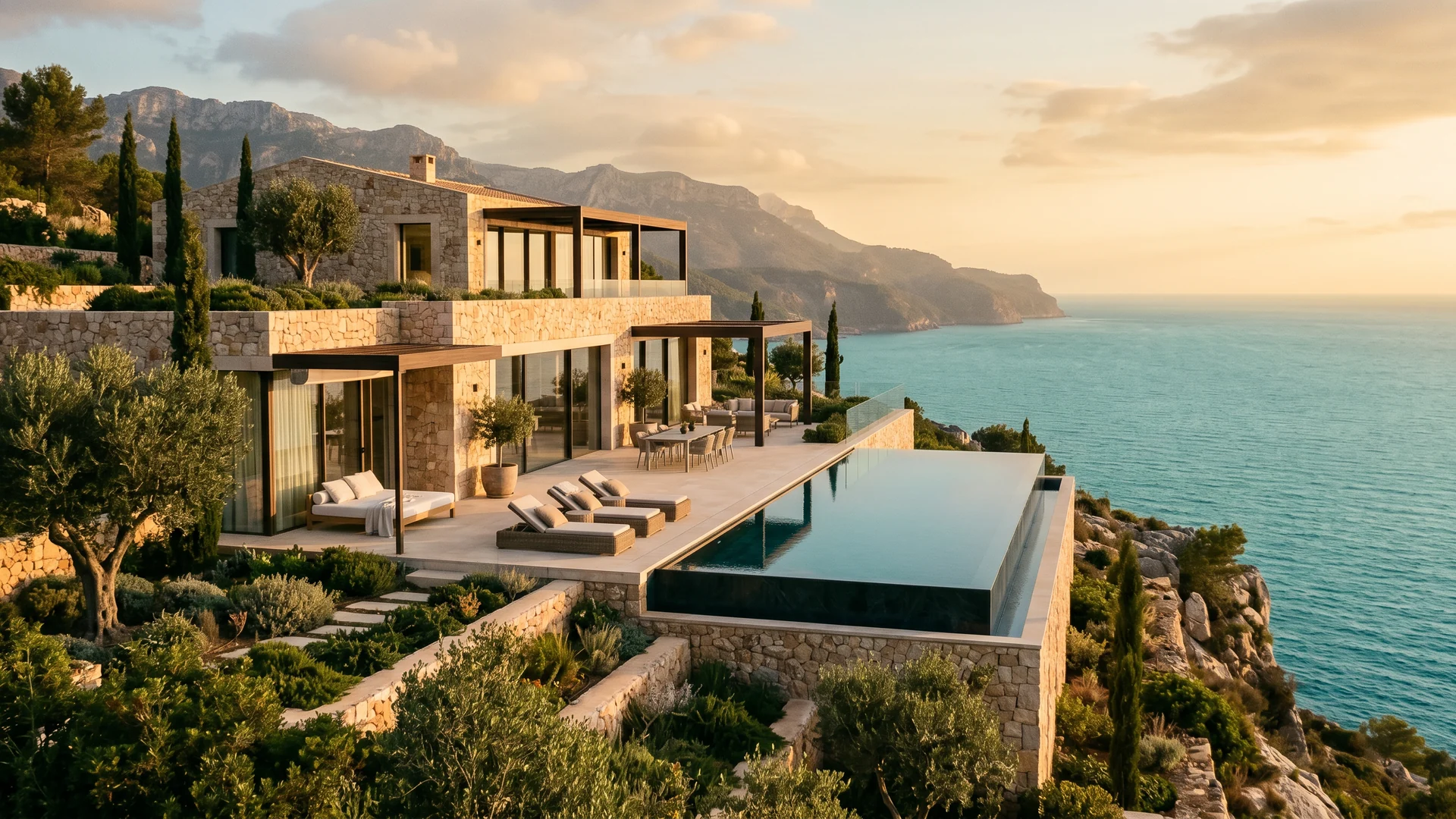
Mallorca is one of Europe's top luxury property markets, with 2025 transaction volumes over 2.3 billion euros and prime homes priced from 2 to 45 million euros.
Key Takeaways
- Mallorca recorded over 2.3 billion euros in luxury transactions in 2025, with prime coastal and mountainside homes priced between 2 million and 45 million euros.
- Calvia's Portals Nous is the island's priciest postal code, with average villa prices of 4.8 million euros and sea-access properties fetching 8 to 22 million euros.
- Port d'Andratx, Deia and Palma's Old Town are key luxury hotspots, with restored Deia stone fincas starting at 1.8 million euros and reaching 12 million euros.
- Total purchasing costs for resale properties run roughly 10 to 13 percent, including Property Transfer Tax of 8 to 10 percent (10 percent above 1 million euros in the Balearics).
- The Balearic Islands apply a 100 percent bonificacion against regional wealth tax, effectively reducing the liability to zero for most taxpayers.
- Spain announced plans in April 2024 to terminate the Golden Visa programme, which previously granted residency for property purchases of 500,000 euros or more.
- Savills and Knight Frank forecast prime price growth of 3 to 5 percent annually over the next three to five years, driven by acute supply constraints.

Introduction to Mallorca's Luxury Real Estate Market
Mallorca, the crown jewel of Spain's Balearic Islands, has firmly established itself as one of Europe's most coveted destinations for luxury real estate investment. With over 300 days of sunshine per year, crystal-clear Mediterranean waters, a rich cultural heritage dating back to Roman times, and a cosmopolitan lifestyle that seamlessly blends traditional Spanish charm with world-class modern amenities, Mallorca attracts ultra-high-net-worth individuals from across the globe.
Mallorca's Position in Global Luxury Markets
The island's luxury property market has demonstrated remarkable resilience through economic cycles, with prime residential values appreciating by an average of 5.8 percent annually over the past decade.
2025 Market Overview and Key Figures
In 2025, the market recorded total luxury transaction volumes exceeding €2.3 billion, with the most desirable coastal and mountainside properties commanding prices between €2 million and €45 million.
Prime Locations and Neighbourhood Analysis
Calvià: Portals Nous, Bendinat, and Illetes
The southwest coast remains the undisputed epicentre of Mallorca's luxury real estate scene. The municipality of Calvià — encompassing the prestigious enclaves of Portals Nous, Bendinat, and Illetes — offers some of the island's most expensive waterfront properties. Portals Nous, home to the glamorous Puerto Portals marina, consistently ranks as Mallorca's priciest postal code with average villa prices of €4.8 million. Properties with direct sea access and private moorings regularly fetch between €8 million and €22 million. Bendinat, anchored by its 18-hole championship golf course and the historic 13th-century castle-turned-residential complex, offers elegant villas priced from €3.5 million to €15 million.
Andratx and Port d'Andratx
The municipality of Andratx, particularly Port d'Andratx, has become a magnet for German, British, and Scandinavian buyers. This former fishing village has transformed into a sophisticated harbour town where waterfront apartments sell for €1.5 million to €4 million and hillside villas with panoramic sea views command €3 million to €18 million. The surrounding Tramuntana mountain villages — Deià, Valldemossa, and Fornalutx — appeal to buyers seeking seclusion and artistic heritage. Properties in Deià, long favoured by writers and musicians, start at €1.8 million for restored stone fincas and can reach €12 million for architect-designed estates with olive groves and sea views.
Palma and the Inland Estates
Palma de Mallorca's Old Town (Casco Antiguo) has experienced a dramatic renaissance over the past fifteen years. Carefully restored palaces and aristocratic townhouses now serve as ultra-luxurious pieds-à-terre for international buyers. A 400-square-metre renovated palace with a private courtyard in the Calatrava district typically costs €2.5 million to €6 million. The Santa Catalina and Portixol neighbourhoods, once humble fishing quarters, now feature architect-designed penthouses priced between €900,000 and €3.5 million with rooftop terraces overlooking Palma Bay. The Golden Mile along the Paseo Marítimo encompasses newly built luxury apartment complexes where three-bedroom residences with concierge services sell for €1.2 million to €4 million.
North and Northeast Coast
The north and east of the island offer distinctly different but equally compelling propositions. Pollença and Alcúdia, with their medieval towns and proximity to the Bay of Pollença, have seen significant luxury development. Beachfront villas in Mal Pas and Bonaire range from €2 million to €7 million. The rural heartland around Santa Maria, Alaró, and Binissalem appeals to buyers seeking authentic Mallorcan finca living with easy access to Palma. Restored fincas with five to fifty hectares of vineyards or almond groves sell from €1.5 million to €8 million. The southeast coast around Santanyí and Cala d'Or attracts buyers with its pristine calas and lower density, with frontline villas priced from €2 million to €10 million.

Property Types and Architectural Heritage
Traditional Mallorcan Fincas
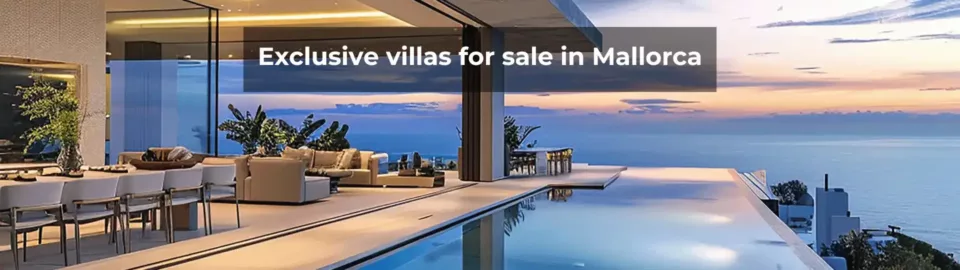
Mallorca's luxury property landscape is dominated by three principal categories: frontline sea-view villas, restored historic fincas, and contemporary architect-designed homes. Traditional Mallorcan fincas — rural stone farmhouses often dating from the 17th to 19th centuries — represent the island's most characterful properties. A fully restored finca typically features thick stone walls, wooden beam ceilings, terracotta floors, a central courtyard (clastra), and often a swimming pool, guest casitas, and olive or citrus orchards. The finest examples in the Tramuntana foothills command premiums of 25 to 40 percent over comparable modern-build properties.
Contemporary Architect-Designed Villas
Contemporary architecture has also made its mark, with internationally renowned architects such as Alberto Rubio, CMV Arquitectos, and Gras Reynés creating cutting-edge villas that blend modernist aesthetics with traditional materials. The 'Ibicenco-Mallorcan modern' style — characterised by cubic forms, white stucco finishes, local stone accents, and seamless indoor-outdoor flow — has become highly sought after. Construction costs for these custom homes range from €2,800 to €4,500 per square metre, with land adding €300 to €1,200 per square metre depending on location and sea views.
Investment Performance and Market Data
Mallorca's luxury real estate market has consistently outperformed many other European destinations. According to Knight Frank's Prime International Residential Index, Mallorca's prime residential prices increased 4.2 percent in 2024 and 3.8 percent in 2025, placing it in the top quartile of global luxury markets.
Price Appreciation and Historical Trends
The compound annual growth rate since 2015 stands at approximately 6.1 percent.
Rental Yield Analysis by Location
Rental yields for luxury properties vary significantly by location: southwest coast villas generate 3.5 to 5.5 percent gross annual yields during the April-to-October season, while Palma Old Town apartments achieve 3 to 4.5 percent year-round. Villa rental rates during peak summer months range from €15,000 to €85,000 per week for the most exclusive properties.
Legal Considerations and Purchasing Process
Non-resident buyers face a straightforward purchasing process in Spain. The acquisition typically involves a 10 percent deposit reservation contract (contrato de arras), followed by completion before a notary (escritura pública) within 30 to 90 days.
The Reservation and Completion Process
Total purchasing costs for resale properties amount to approximately 10 to 13 percent of the purchase price, comprising: Property Transfer Tax (ITP) at 8 to 10 percent depending on the property value (10 percent applies above €1 million in the Balearics), notary and land registry fees (0.5 to 1 percent), and legal fees (1 to 1.5 percent). New-build purchases attract VAT (IVA) at 10 percent plus Stamp Duty (AJD) at 1.2 percent.
Purchase Costs and Taxes
It is essential to engage an independent Spanish lawyer (abogado) who is not connected to the seller or agent. A thorough due diligence process should verify title deeds at the Land Registry (Registro de la Propiedad), confirm there are no encumbrances, check urban planning compliance, and ensure all construction licences are in order.
Due Diligence and Legal Safeguards
Buyers should also obtain a Spanish tax identification number (NIE) before completion.
Taxation Framework for International Buyers
Spain's tax regime for property owners is comprehensive and varies based on residency status. Spanish tax residents are subject to Wealth Tax (Patrimonio) on worldwide assets exceeding €700,000, with rates from 0.2 to 3.45 percent. However, the Balearic Islands apply a 100 percent bonificación (credit) against their regional wealth tax, effectively reducing the liability to zero for most taxpayers.
Wealth Tax and Balearic Bonificación
Non-residents pay Income Tax on imputed rental income (1.1 to 2 percent of the catastral value annually, depending on whether the catastral valuation has been revised) and Capital Gains Tax at 19 percent on profits from property sales (or 24 percent for non-EU residents). The standard Capital Gains Tax rate for residents is 19 percent on the first €6,000 of gain, 21 percent on the next €44,000, 23 percent on gains up to €200,000, and 26 percent above that.
Income and Capital Gains Tax
Annual property tax (IBI) is typically 0.4 to 1.1 percent of the catastral value, which is usually well below market value. The Balearic government has introduced a sustainable tourism tax (ITS) which applies to all overnight stays, but this has had minimal impact on the luxury property market.
Annual Property Tax and Other Levies
The Golden Visa Programme
Spain's Golden Visa programme (Investor Residence Permit) has been a significant driver of luxury property demand, particularly from non-EU buyers from the Middle East, North America, China, and post-Brexit Britain. The programme grants residency to investors who purchase real estate valued at €500,000 or more. The visa covers the investor, their spouse, dependent children, and dependent parents. It permits travel throughout the Schengen zone and does not require minimum physical presence in Spain, making it an attractive option for global citizens.
Golden Visa Benefits and Eligibility
However, in April 2024 the Spanish government announced plans to terminate the Golden Visa programme. As of early 2026, transitional provisions are in place — applications submitted before a cut-off date are still being processed, but new applications may be affected. Prospective buyers should seek current legal advice as the situation evolves. The Balearic Islands have also been exploring their own residency-by-investment frameworks, though none have yet been enacted.
Programme Changes and Current Status
Lifestyle and Amenity Infrastructure
Mallorca's luxury lifestyle proposition extends far beyond property. The island boasts four marinas capable of accommodating superyachts — Puerto Portals (berths up to 65 metres), Port Adriano (designed by Philippe Starck, berths up to 80 metres), Club de Mar in Palma, and Marina Port de Mallorca. Palma International Airport (PMI) offers direct flights to over 150 destinations, including year-round connections to major European hubs and seasonal services to the Middle East and North America.
Superyacht Marinas and International Connectivity
Private aviation facilities at Son Sant Joan cater to the growing demand for business jet travel. The healthcare infrastructure includes Hospital Universitari Son Espases (public) and Clinica Rotger (private), both equipped to international standards. The island is home to over twenty golf courses, including Son Gual, Alcanada, and the Golf de Andratx, which consistently rank among Europe's finest. The gastronomic scene features nine Michelin-starred restaurants, including Voro (two stars), Marc Fosh, and Adrián Quetglas.
Healthcare, Golf, and Gastronomy


Market Outlook for 2026-2028
Looking ahead, Mallorca's luxury real estate market is expected to continue its measured appreciation trajectory. Supply constraints — particularly for frontline sea-view properties and historic fincas — remain acute due to strict building regulations and the island's limited developable coastline. The Balearic government's 1991 Spatial Planning Law (Ley de Ordenación del Territorio) and subsequent amendments have imposed stringent limits on new construction, effectively capping supply.
Supply Constraints and Regulatory Pressures
Simultaneously, demand continues to be fuelled by the island's enduring appeal as a safe-haven investment destination, particularly for European and Middle Eastern buyers seeking political and economic stability. However, near-term headwinds include potential changes to Golden Visa eligibility, rising interest rates affecting leveraged buyers, and the Balearic government's ongoing discussions about limiting foreign property purchases — measures inspired by similar restrictions in Malta, Finland, and other European jurisdictions.
Demand Drivers and Buyer Demographics
Savills and Knight Frank both forecast prime residential price growth of 3 to 5 percent annually for Mallorca over the next three to five years, with the ultra-prime segment (properties above €10 million) potentially outperforming due to its extreme supply scarcity. For investors, the message is clear: Mallorca offers a compelling blend of lifestyle, security, and long-term capital appreciation that few other markets can match.
Price Forecasts and Investment Implications
Practical Guide to Buying in Mallorca
For prospective buyers, the journey begins with assembling a trusted local team: an independent lawyer specialising in Spanish property law, a gestor (tax representative), and a reputable estate agent with proven local knowledge. It is strongly recommended to visit properties in person and to explore the island's diverse regions before committing, as the character of each municipality varies enormously.
Assembling Your Professional Team
Financing is available from Spanish banks offering mortgages of up to 70 percent of the valuation for non-residents, typically at Euribor plus 2 to 3 percent with terms up to 25 years, though many luxury buyers choose all-cash transactions. Utility connections, community fees, and ongoing maintenance costs should be budgeted at approximately 1 to 2 percent of the property value annually. Buyers should also investigate whether the property is classified as rustic (rústico) or urban (urbano), as this affects everything from renovation permissions to tax treatment.
Financing Options and Property Classification
Finally, engaging a local property manager is advisable for owners who plan to use their Mallorca home seasonally, with annual management fees typically ranging from €6,000 to €24,000 depending on property size and services required.
Ongoing Management and Maintenance
Conclusion
Mallorca's luxury real estate market represents a mature, transparent, and deeply desirable investment environment. The combination of Mediterranean beauty, legal certainty under Spanish and EU frameworks, world-class infrastructure, and a stable political climate creates a proposition that few competing destinations can fully replicate. Whether seeking a frontline sea-view villa, a historic mountain finca, or a chic Palma pied-à-terre, Mallorca offers a spectrum of opportunities for the discerning buyer. With careful due diligence, professional advice, and a clear understanding of the tax and legal landscape, purchasing luxury property on this magnificent island remains one of the most rewarding investments in European real estate.
Frequently Asked Questions (FAQ)
How much does luxury real estate cost in Mallorca?
Mallorca's most desirable coastal and mountainside luxury properties command prices between 2 million and 45 million euros. The island recorded total luxury transaction volumes exceeding 2.3 billion euros in 2025, with average villa prices in the priciest postal code, Portals Nous, reaching 4.8 million euros.
Where are the most expensive areas to buy property in Mallorca?
The southwest coast municipality of Calvia is the epicentre, with Portals Nous ranking as Mallorca's priciest postal code. Sea-access properties there fetch 8 to 22 million euros. Other prime spots include Port d'Andratx, the Tramuntana villages of Deia and Valldemossa, and Palma's restored Old Town.
What are the total costs and taxes when buying property in Mallorca?
Total purchasing costs for resale properties amount to roughly 10 to 13 percent of the price. This includes Property Transfer Tax of 8 to 10 percent (10 percent above 1 million euros in the Balearics), notary and registry fees of 0.5 to 1 percent, and legal fees of 1 to 1.5 percent. New-builds attract 10 percent VAT plus 1.2 percent Stamp Duty.
Can non-residents buy property in Mallorca, and what is the process?
Yes, non-resident buyers face a straightforward process in Spain. It typically involves a 10 percent deposit reservation contract (contrato de arras), followed by completion before a notary within 30 to 90 days. Buyers must obtain a Spanish tax identification number (NIE) before completion and should engage an independent Spanish lawyer.
What is happening with Spain's Golden Visa programme for Mallorca buyers?
In April 2024 the Spanish government announced plans to terminate the Golden Visa programme, which granted residency for real estate purchases of 500,000 euros or more. As of early 2026, transitional provisions let applications submitted before a cut-off date still be processed, but new applications may be affected. Buyers should seek current legal advice.
What rental yields can luxury properties in Mallorca generate?
Rental yields vary by location. Southwest coast villas generate 3.5 to 5.5 percent gross annual yields during the April-to-October season, while Palma Old Town apartments achieve 3 to 4.5 percent year-round. Villa rental rates during peak summer months range from 15,000 to 85,000 euros per week for the most exclusive properties.
Is buying luxury property in Mallorca a good investment?
Mallorca's prime market has outperformed many European destinations, with a compound annual growth rate of about 6.1 percent since 2015. Savills and Knight Frank forecast 3 to 5 percent annual price growth over the next three to five years, with the ultra-prime segment above 10 million euros potentially outperforming due to extreme supply scarcity.
What lifestyle amenities does Mallorca offer luxury homeowners?
Mallorca offers four superyacht marinas including Puerto Portals and Philippe Starck-designed Port Adriano, plus Palma International Airport with direct flights to over 150 destinations. The island has over twenty golf courses, nine Michelin-starred restaurants such as Voro, and international-standard healthcare including Hospital Son Espases and Clinica Rotger.

More from Mallorca
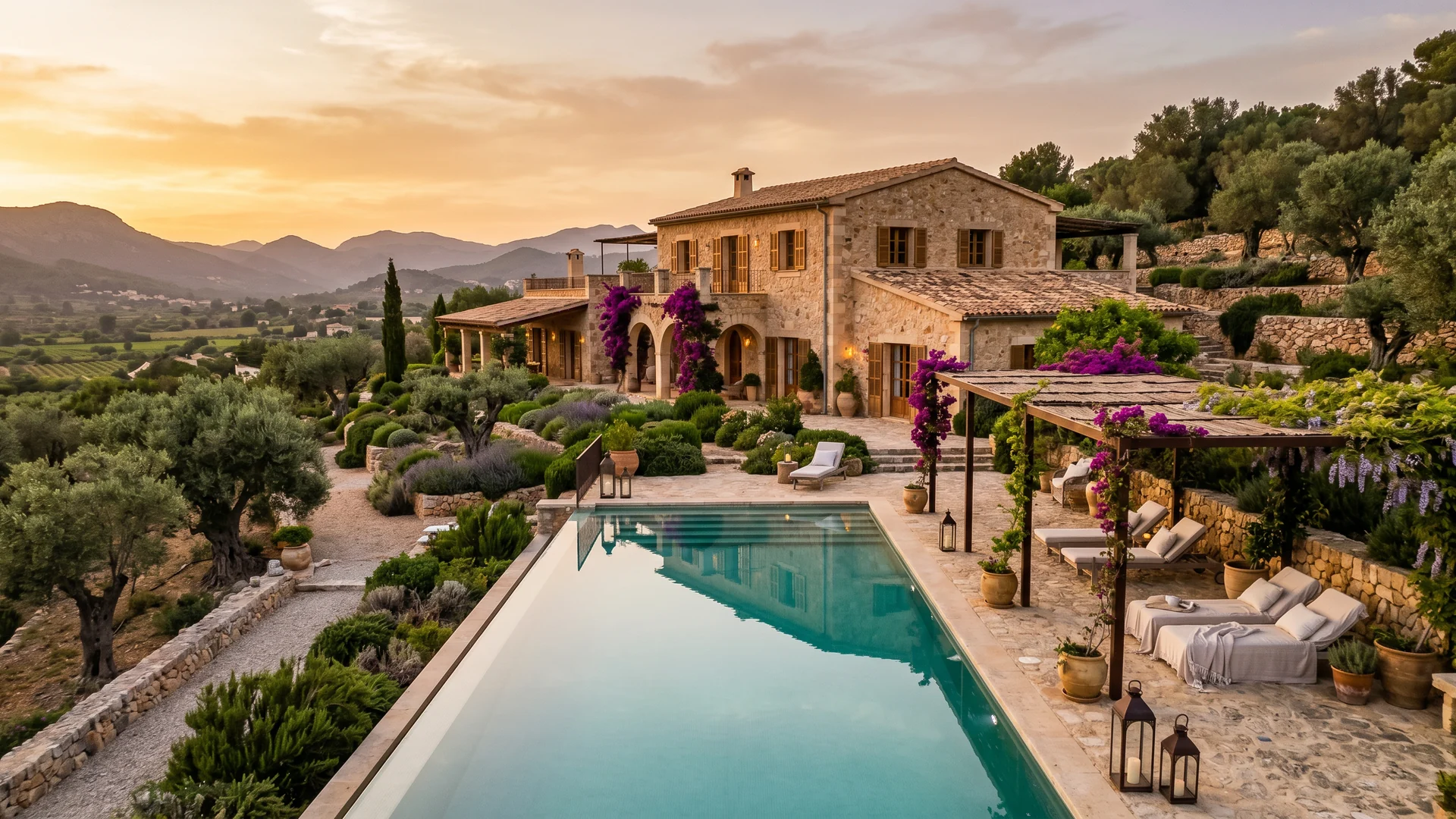
Luxury Finca Complete Guide
Luxury finca guide for Mallorca: prime locations, prices from 1.5M to 25M euros, restoration costs, water rights and a 7.2% growth rate driving this r…
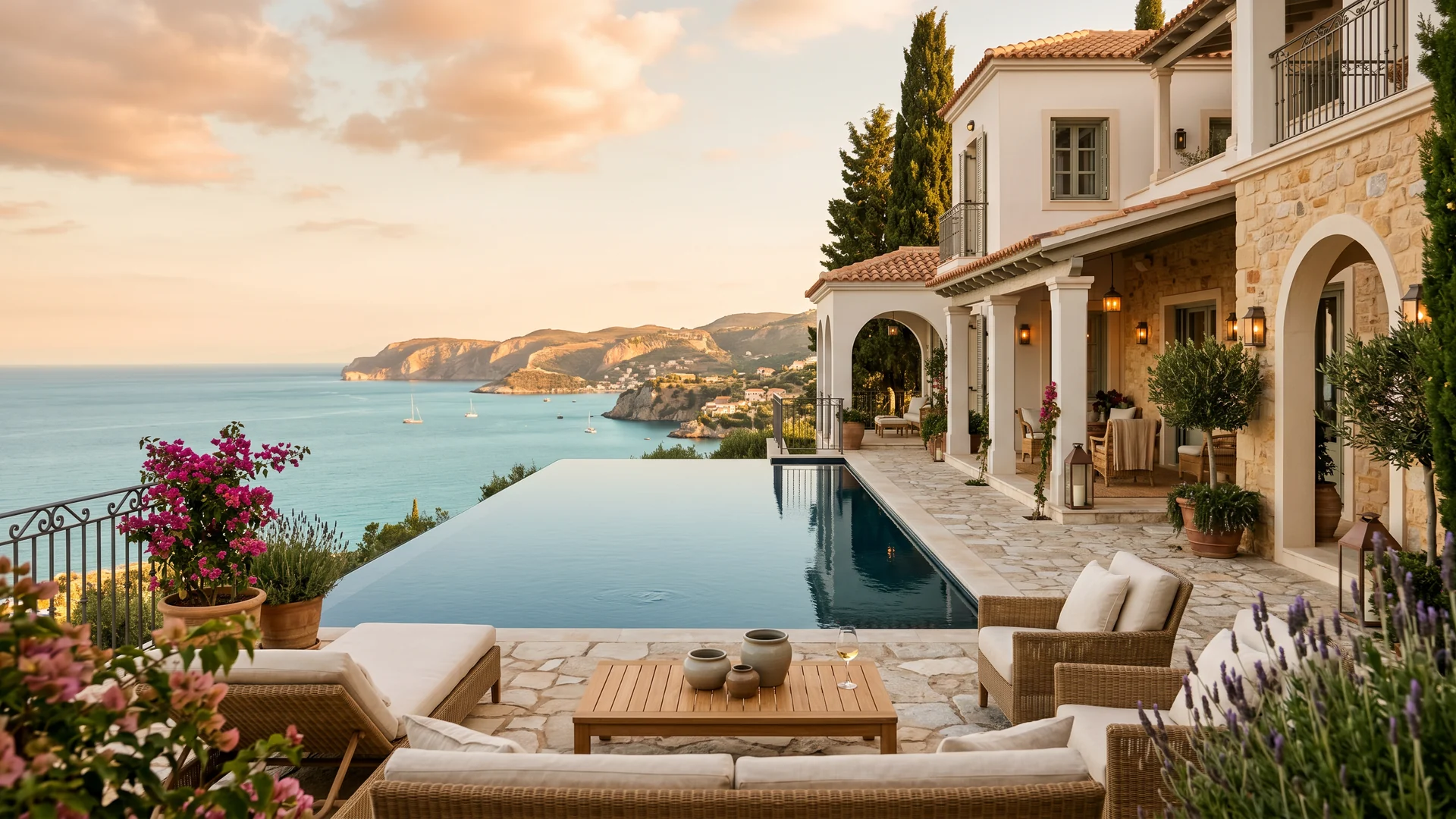
Mediterranean Villa Buying Guide
Mediterranean villa buying guide 2026: prices, yields and tax across Spain, France, Italy, Greece, Croatia and Montenegro in a 320 billion euro luxury…

The Benefits of Properties Near International Schools
Investing in real estate often hinges on the potential for property value appreciation. One of the most compelling reasons to consider a particular lo…