Luxury Finca Complete Guide
Luxury finca guide for Mallorca: prime locations, prices from 1.5M to 25M euros, restoration costs, water rights and a 7.2% growth rate driving this rare asset.…

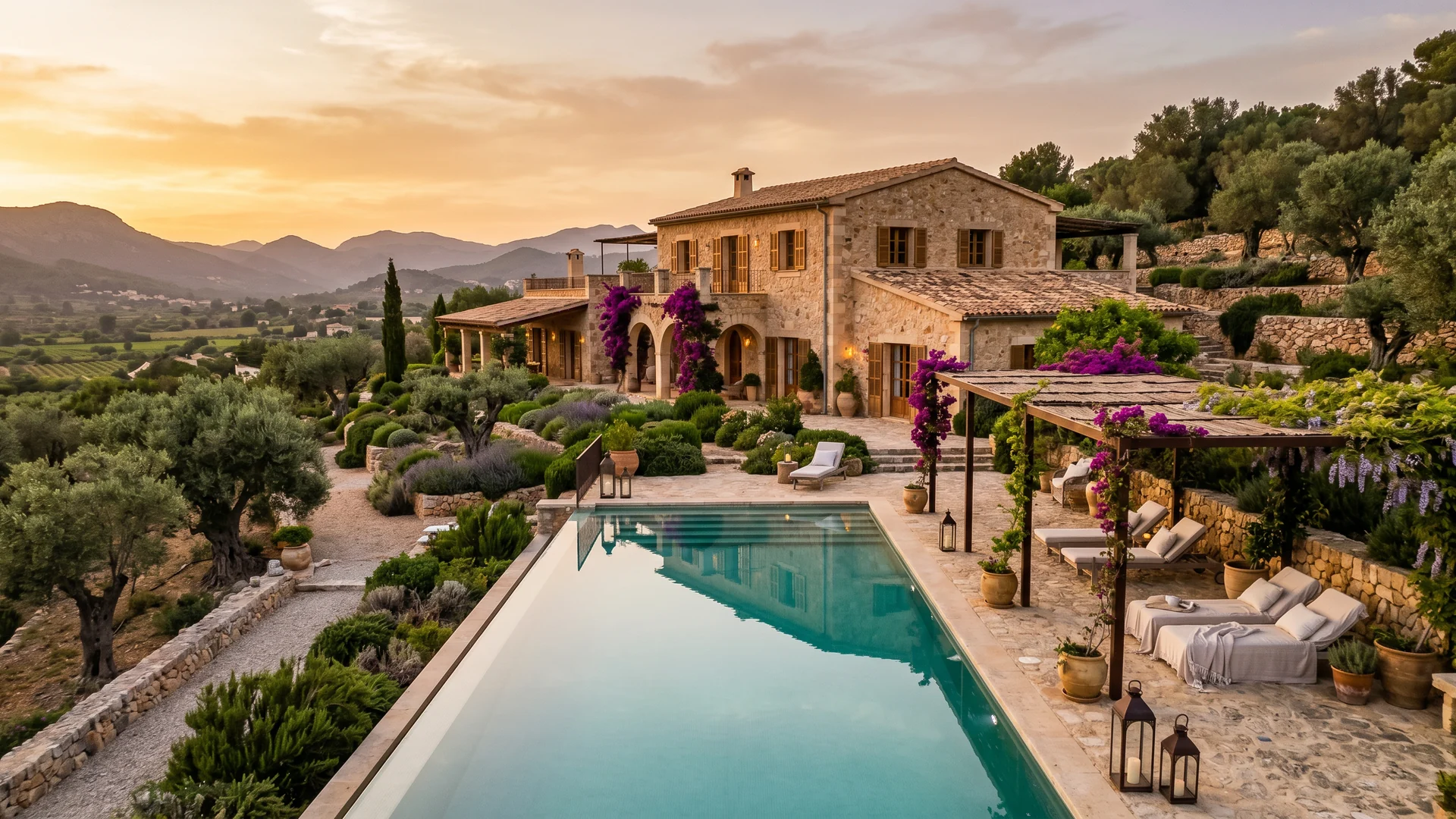

A luxury finca is a fully restored historic Mallorcan stone farmhouse with farmland, where estates above 2 million euros formed a market worth roughly 1.8 billion euros in 2025.
Key Takeaways
- A Mallorcan finca is a traditional rural stone farmhouse, often dating from the 17th to 19th centuries, surrounded by agricultural land that embodies the island's heritage.
- The luxury finca market, defined as fincas valued above 2 million euros, represented approximately 1.8 billion euros in total value in 2025, with about 200 transactions above that threshold.
- The Deia-Valldemossa corridor commands the highest premiums, with fincas selling for 4 million to 25 million euros, and a restored 17th-century estate near Deia sold for a reported 18.5 million euros in 2024.
- Authentic fincas feature marès sandstone walls 60 to 120 centimetres thick, juniper or olive wood beam ceilings, terracotta floors, and a central courtyard or clastra.
- High-quality finca restoration in 2026 typically costs 2,200 to 4,500 euros per square metre, so a 500-square-metre renovation may cost between 1.1 million and 2.25 million euros plus land.
- Prime fincas have shown a compound annual growth rate of approximately 7.2 percent since 2015, driven by extreme scarcity of only an estimated 400 to 500 such properties islandwide.
- Water rights are a critical asset, and buyers must verify any well holds a valid concession (concesión de aguas) and that land classification permits intended use.
The Luxury Finca: Mallorca's Ultimate Real Estate Asset
Historical Origins and Cultural Significance
The Mallorcan finca — a traditional rural stone farmhouse, often dating from the 17th to 19th centuries, surrounded by agricultural land — represents the most authentic and emotionally resonant category of luxury property on the island. The word 'finca' in Spanish simply means 'estate' or 'farm', but in the Mallorcan context, it has evolved to signify something far more significant: a fully restored historic country property that embodies the island's agricultural heritage, architectural traditions, and bucolic landscape.
Defining Characteristics of a Luxury Finca
The finest fincas are not merely houses but complete estates encompassing the main farmhouse (casa principal), guest cottages (casitas), outbuildings, swimming pools, and typically between 5 and 200 hectares of land planted with olive, almond, carob, and citrus trees. In 2025, the luxury finca market — defined as fincas valued above €2 million — represented approximately €1.8 billion in total property value, with roughly 200 transactions recorded above this threshold.
The Anatomy of an Authentic Finca
Stone Architecture and Traditional Materials
An authentic Mallorcan finca is immediately recognisable by its distinctive architectural language, developed over centuries of rural building tradition. The characteristic elements include: thick load-bearing stone walls (pared de mampostería) constructed from local marès sandstone, typically 60 to 120 centimetres thick, providing exceptional thermal mass that keeps interiors cool in summer and retains warmth in winter; traditional wooden beam ceilings (vigas de sabina) made from local juniper or olive wood, often with cane or terracotta vaulting between beams; stone-flagged or terracotta tiled floors (suelos de barro cocido); a central courtyard or clastra, the heart of the finca, often featuring an ancient well, outdoor bread oven, and shaded dining areas beneath pergolas draped with bougainvillea or wisteria;
Layout and Key Features
arched stone portals and deeply recessed windows (ventanas con mainel); and outbuildings including stables, dairies, olive presses, and grain stores, many of which are now converted into guest accommodation, gyms, or home offices.
Preserved Heritage Elements
The most prized fincas also feature original elements such as olive oil mills (tafona), wine presses (trull), and defensive lookout towers (torres de defensa) built to guard against pirate raids in the 16th and 17th centuries.

Prime Finca Locations and Price Analysis
The Tramuntana Foothills
The Tramuntana mountain foothills — the region stretching from Andratx in the southwest to Pollença in the north — encompasses the island's most coveted finca territory. Within this zone, distinct micro-locations command markedly different prices. The valley of Sóller and the village of Fornalutx, nestled in a fertile citrus-growing basin, represent a premium finca enclave. Restored fincas with orange and lemon groves and mountain views sell for €3 million to €15 million. The area's microclimate, producing some of the Mediterranean's finest citrus, adds both aesthetic and agricultural value to these estates. The Deià-Valldemossa corridor, immortalised by artists and writers from Robert Graves to Frédéric Chopin, commands the highest premiums. Fincas in this area, particularly those with sea views from elevated positions, sell for €4 million to €25 million. The landscape of olive-terraced hillsides cascading towards the glittering Mediterranean creates an almost mythic beauty. In 2024, a restored 17th-century finca with 40 hectares of olive groves, a private chapel, and panoramic sea views near Deià sold for a reported €18.5 million.
Northern Estates and Central Wine Country
The Pollença and Alcúdia region in the north offers a different finca proposition: larger estates on flatter terrain, often with direct access to the foothills of the Tramuntana and proximity to the excellent beaches of the Bay of Pollença. Fincas here typically range from €1.8 million to €10 million, offering better value per hectare than the southwestern mountain villages. The central plain (Pla de Mallorca) — encompassing the municipalities of Santa Maria del Camí, Alaró, Binissalem, and Sineu — is the island's agricultural heartland, characterised by gently rolling countryside, vineyards, and almond orchards. Fincas in this zone are typically larger (20 to 200 hectares), with prices from €1.5 million to €8 million. The area around Alaró, dominated by its distinctive twin-peaked mountain and the castle ruins at its summit, has become increasingly sought after in recent years.
Coastal Fincas: Rare and Prestigious
The southeastern corner of Mallorca, particularly around Santanyí, Felanitx, and the Mondragó Natural Park, offers fincas in a more rugged, unspoiled landscape where the red earth contrasts beautifully with white stone buildings and the turquoise sea. Prices here range from €1.5 million to €6 million, offering a more accessible entry point to the finca market.
Renovation and Restoration: Preserving Authenticity
Navigating Heritage Protection Laws
The restoration of a historic finca is an art form requiring deep local knowledge, specialist craftsmanship, and patience. The Balearic Islands' strict heritage and planning regulations mean that any renovation of a protected or historic property must navigate a complex approval process involving both municipal authorities and the Island Council (Consell de Mallorca).
Cost Considerations and Timelines
Restoration costs for a comprehensive, high-quality finca renovation in 2026 typically range from €2,200 to €4,500 per square metre, depending on the condition of the original structure, the extent of modern interventions required, and the level of finish. A 500-square-metre finca renovation might therefore cost between €1.1 million and €2.25 million, in addition to the land acquisition cost.
Balancing Authenticity with Modern Comfort
Key considerations in finca restoration include: structural stabilisation of ancient stone walls using traditional lime mortar techniques rather than modern cement, which can trap moisture and damage historic stone; careful integration of modern services (electricity, plumbing, heating, and cooling) into thick stone walls without compromising the building's fabric or appearance; restoration of original features such as wooden beam ceilings, stone arches, and terracotta floors; addition of modern amenities — infinity pools, spa facilities, home cinemas, and wine cellars — in ways that complement rather than overwhelm the historic structure; and landscape restoration of agricultural terraces, irrigation systems, and traditional dry-stone walls (pedra en sec).
The Finca as a Lifestyle Asset
Stewardship and Agrarian Traditions
Owning a luxury finca is fundamentally different from owning a villa. A finca carries with it a custodial responsibility — the stewardship of agricultural land, the maintenance of historic buildings, and the preservation of a cultural landscape that has evolved over centuries. Many finca owners embrace this role, engaging local farmers to maintain olive groves and produce estate olive oil, planting vineyards that produce limited quantities of Mallorcan wine, and hosting events that connect the estate to the local community.
Wellness, Privacy, and Multi-Generational Living
The finca lifestyle is one of spaciousness, privacy, and connection to nature and the seasons. It is a slower, more grounded way of living that appeals to buyers seeking refuge from the intensity of urban professional lives. The typical luxury finca owner is a European or international family, often with children, who spend extended periods on the island — three to six months per year — and view their finca as a multi-generational asset that will be passed down to children and grandchildren.
Water Rights, Agriculture, and Land Stewardship
Water Rights and Resource Security
One of the most critical and often overlooked aspects of finca ownership is water. Mallorca is a Mediterranean island with limited freshwater resources, and water rights are a complex and valuable asset. Fincas typically rely on a combination of water sources: municipal mains water (where connected), private wells extracting from subterranean aquifers, and traditional rainwater collection systems (cisternas and aljibes). The legality and sustainability of well water extraction is increasingly scrutinised by the Balearic water authority. Buyers should verify that any well on the property has a valid concession (concesión de aguas) and that extraction is within permitted limits.
Land Classification and Agricultural Obligations
Agricultural land classification is also critical. Finca land is typically classified as either 'rústico común' (common rustic land) or 'rústico protegido' (protected rustic land). The latter imposes significant restrictions on new construction and changes of use. Buyers should also investigate any obligations under the Common Agricultural Policy (CAP) if the land is registered for agricultural subsidies, and consider entering into custody-of-territory agreements (custodia del territorio) with conservation organisations to protect the ecological value of the estate.
Investment Performance and Valuation Drivers
Value Appreciation Drivers
Luxury fincas have demonstrated exceptional capital appreciation over the past decade, outperforming many other Mallorcan property categories. The compound annual growth rate for prime fincas has been approximately 7.2 percent since 2015, according to Engel & Völkers and Knight Frank data. This outperformance is driven by extreme supply constraints — authentic, fully-restored fincas with significant land are genuinely rare, with an estimated 400 to 500 properties in this category across the entire island — and sustained international demand from buyers seeking authenticity over generic luxury.
Key Valuation Factors
Valuation drivers for fincas include: location and views (the Tramuntana foothills commanding premiums of 30 to 50 percent over comparable fincas in the central plain); land quality and extent (productive agricultural land, particularly established olive groves and vineyards, adds significant value); restoration quality and integrity (the difference between a sensitively restored finca and one that has been over-renovated with generic luxury finishes can be €1 million to €3 million); water security (reliable legal water supply adding 5 to 10 percent to value); and privacy (properties not overlooked by neighbours or public roads commanding a significant premium).
Conclusion
The luxury finca represents the apogee of the Mallorcan property experience — a convergence of history, architecture, landscape, and lifestyle that is genuinely unique in the Mediterranean. For buyers who value authenticity, space, and a deep connection to the land, no other property category on the island comes close. While the purchase and maintenance of a luxury finca requires significant financial commitment and ongoing stewardship, the rewards — both financial and experiential — are commensurate. As supply of authentic fincas continues to tighten and demand from discerning international buyers grows, these remarkable properties are likely to remain among Mallorca's most prized and appreciating real estate assets for decades to come.

Frequently Asked Questions (FAQ)
What is a luxury finca in Mallorca?
A luxury finca is a fully restored historic Mallorcan country estate built around a traditional stone farmhouse. While 'finca' simply means estate or farm in Spanish, the island's finest examples are complete estates with guest cottages, swimming pools, and typically 5 to 200 hectares of olive, almond, carob, and citrus land embodying agricultural heritage.
How much does a luxury finca cost in Mallorca?
Luxury fincas, defined as those valued above 2 million euros, span a wide range by location. Fincas in the Deia-Valldemossa corridor sell for 4 million to 25 million euros, Sóller and Fornalutx for 3 million to 15 million euros, while the central plain and southeastern coast start around 1.5 million euros.
Where are the best finca locations on Mallorca?
The Tramuntana mountain foothills, stretching from Andratx to Pollença, hold the most coveted finca territory. The Deia-Valldemossa corridor commands the highest premiums, the Sóller and Fornalutx citrus valley is a premium enclave, while Pollença, Alcúdia, and the central Pla de Mallorca offer larger estates at better value per hectare.
How much does it cost to restore a historic finca in Mallorca?
Comprehensive, high-quality finca restoration in 2026 typically costs 2,200 to 4,500 euros per square metre, depending on the original structure's condition and finish level. A 500-square-metre renovation might therefore cost between 1.1 million and 2.25 million euros, in addition to the land acquisition cost.
Are luxury fincas a good investment in Mallorca?
Luxury fincas have outperformed many Mallorcan property categories, with prime fincas showing a compound annual growth rate of approximately 7.2 percent since 2015, according to Engel & Völkers and Knight Frank data. This is driven by extreme scarcity, with only an estimated 400 to 500 authentic restored properties across the entire island.
Why are water rights important when buying a Mallorcan finca?
Water is a critical, often overlooked asset because Mallorca has limited freshwater. Fincas rely on municipal mains, private wells, and rainwater cisterns. Buyers should verify any well has a valid concession (concesión de aguas) and stays within permitted limits, since reliable legal water supply can add 5 to 10 percent to a finca's value.
What makes an authentic Mallorcan finca different architecturally?
An authentic finca is recognisable by thick load-bearing marès sandstone walls 60 to 120 centimetres thick, traditional juniper or olive wood beam ceilings, and stone-flagged or terracotta floors. A central courtyard, or clastra, with an ancient well and bread oven forms its heart, alongside arched stone portals and recessed windows.
What restrictions apply to renovating a historic finca in Mallorca?
Renovating a protected or historic finca must navigate a complex approval process involving both municipal authorities and the Island Council, the Consell de Mallorca. Restorers should use traditional lime mortar rather than cement, and land classified as 'rústico protegido' imposes significant restrictions on new construction and changes of use.

More from Mallorca
Mediterranean Villa Buying Guide
Mediterranean villa buying guide 2026: prices, yields and tax across Spain, France, Italy, Greece, Croatia and Montenegro in a 320 billion euro luxury…
Mallorca Luxury Real Estate Guide
Mallorca luxury real estate guide: 2025 prices from 2 to 45 million euros, top areas like Portals Nous and Port d’Andratx, taxes, Golden Visa an…

The Benefits of Properties Near International Schools
Investing in real estate often hinges on the potential for property value appreciation. One of the most compelling reasons to consider a particular lo…